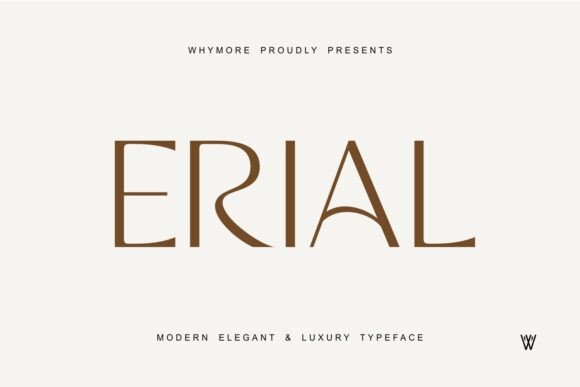
Discover Erial: A Modern Serif for Refined Design Projects
When you're working on a project that demands a touch of sophistication without feeling stuffy or outdated, the choice of typeface becomes critical. Erial steps into that space as a modern serif font, offering a blend of classic elegance and clean, contemporary lines. It’s not about loud declarations; it’s about quiet confidence. Think of it as the well-tailored suit of the font world—it communicates professionalism and attention to detail instantly. For designers, entrepreneurs, and creators, understanding a typeface like Erial means unlocking a tool that can subtly elevate the perceived value of your work.
The Visual Character of Erial
At its core, Erial is a serif font characterized by its delicate details and structured form. The serifs—the small strokes at the ends of letters—are present but refined, avoiding the heavy, sometimes clunky feel of some traditional serifs. This gives the typeface a luxurious appearance suitable for high-end applications. The letterforms feature a balanced contrast between thick and thin strokes, contributing to its readability while maintaining an air of elegance. It’s a typeface that feels both familiar and fresh, making it a versatile player in your design assets toolkit.
What makes Erial stand out in a crowded market of serif fonts is its ability to bridge the gap between formal and accessible. It carries the weight and authority needed for logo design and brand identity systems, yet it remains approachable enough for social media graphics and web design. This duality is its strength. It doesn’t scream for attention; instead, it draws the viewer in with its polished aesthetic, making it an excellent choice for projects where first impressions and lasting perception matter.
Where Erial Truly Shines: Practical Applications
Knowing where a font works best is half the battle in design. Erial excels in environments where clarity meets class. For wedding invitations & event stationery, it’s a natural fit. The font’s elegant curves and classic structure lend themselves beautifully to formal announcements, save-the-dates, and event programs. It sets a tone of celebration and importance from the moment the invitation is seen.
Beyond paper, Erial proves its worth in the digital crafting and design space. It’s fully compatible with popular platforms like Cricut, Procreate, and Canva. This means whether you’re creating custom decals, designing a digital planner, or crafting social media graphics for a small business, Erial integrates smoothly. Its clean lines ensure that even at smaller sizes or when cut from vinyl, the letters remain distinct and legible—a crucial factor for any commercial font.
For entrepreneurs and marketers, Erial offers a path to more professional visuals. Using it for branding, presentations, or packaging design can instantly elevate a brand’s aesthetic. A bakery using Erial on its menu or packaging communicates artisanal quality. A consultancy firm using it in its proposals conveys trust and expertise. The font becomes part of the brand’s visual language, contributing to consistency and recognition across all touchpoints.
Integrating Erial into Your Workflow
Choosing a font is more than just picking something that looks nice. It’s about evaluating fit. When considering Erial, start by looking at your project’s core message. Does it require formality, heritage, or a premium feel? If yes, Erial is a strong candidate. Next, test it. Import the font into your primary software—be it Adobe Illustrator, Canva, or your Cricut Design Space. Type out key phrases from your project. Does it maintain readability? Does its personality align with your vision?
Font pairing is another critical step. As a serif font, Erial often pairs beautifully with a clean sans serif font for body text, creating a clear visual hierarchy. For example, you might use Erial for headlines and a simple sans serif like Open Sans for paragraphs. Alternatively, for a more dramatic effect, it can be paired with a subtle script font or handwritten font for accent text in invitations or logos. Always test pairings in context to ensure harmony.
Finally, review the complete character set. Erial includes uppercase and lowercase letters, punctuation, and numerals. Ensure the glyphs you need for your language or specific design are present. For commercial projects, always verify the licensing. Most premium fonts like Erial come with a license that covers both personal and commercial use, but it’s a best practice to double-check the terms to avoid any issues down the line. This due diligence is part of working professionally with design assets.
Erial's Role in Modern Typography
In the landscape of modern typography, fonts like Erial represent a move towards adaptable elegance. They are not relics of the past but tools designed for today’s multi-platform reality. A font must work on a printed brochure, a smartphone screen, a cut piece of vinyl, and a video overlay. Erial’s design considers this versatility. Its clean lines ensure scalability, while its delicate details add character without compromising function.
For content creators and publishers, this typeface offers a way to establish a distinctive voice. Whether it’s used in editorial design for magazine layouts or as the primary font for a blog’s headings, it helps create a cohesive and sophisticated reading experience. It influences readability by guiding the eye smoothly along lines of text, and its structured form aids in creating clear visual hierarchy, making content easier to navigate and digest.
Ultimately, Erial is more than just a collection of letters. It’s a strategic choice. It’s for the designer who understands that typography shapes perception, for the entrepreneur who knows that details build brands, and for the craacher who values both beauty and precision. It’s a premium font that doesn’t just decorate; it communicates. By integrating Erial thoughtfully, you’re not just choosing a typeface—you’re making a deliberate decision to enhance the clarity, professionalism, and emotional resonance of your creative work.